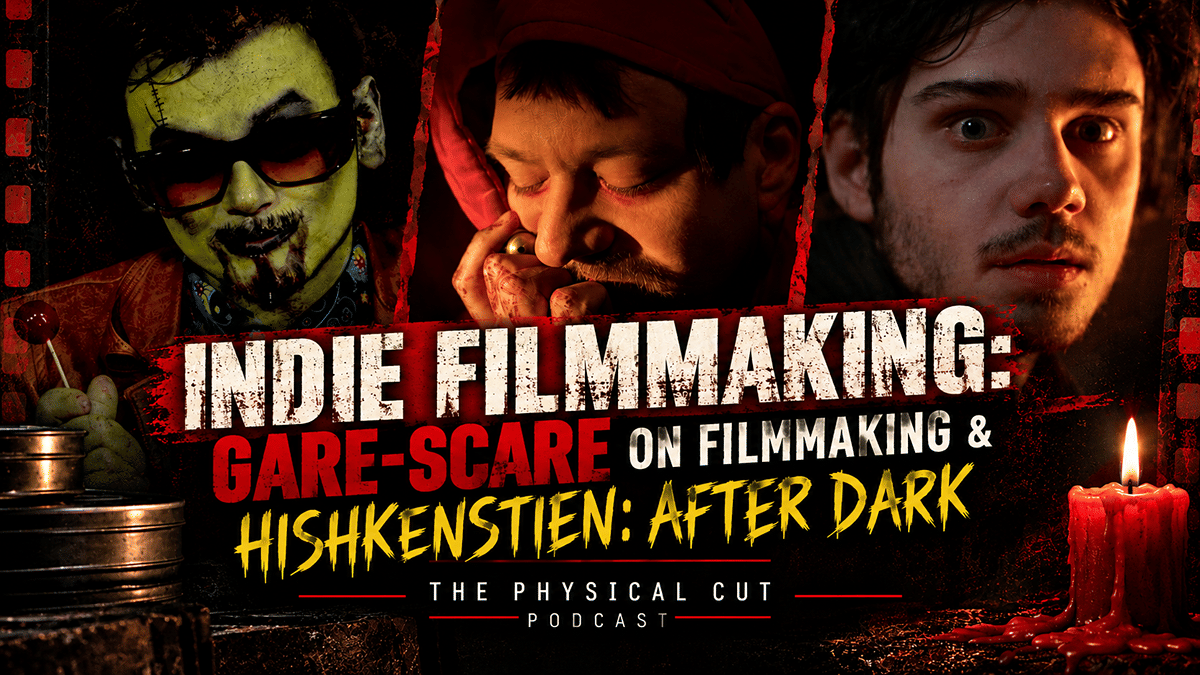
What makes someone want to make movies? For filmmaker Gare-Scare, the answer goes back to a childhood spent watching Jaws, classic monster movies, and the kind of genre films that made filmmaking feel less like an academic exercise and more like an experience. His approach is rooted in horror, science fiction, exploitation, gothic cinema, and, perhaps most importantly, the belief that movies should still feel like movies.
On this episode of The Physical Cut, we talk with Gare about Wicker Sticks Entertainment, the filmmakers and films that shaped him, the making of Fortunato’s Descent, the strange origins of Hishkenstein: After Dark, and what it means to see independent films continue their lives through physical media.
Building Wicker Sticks Entertainment
Gare describes Wicker Sticks Entertainment as an effort to create genre films while refusing to stay inside a predictable formula. The idea, as he explains it, is to create genre films while being “as outside the box as possible” and not being afraid to be completely yourself and unique, particularly within science fiction, crime, horror, and other forms of genre filmmaking.
That idea of being yourself also carries over into the people Gare wants to work with. He talked about wanting to create opportunities for neurodiverse and disabled people without turning those characteristics into the identity of the project. Instead, he wants the work and the talent to remain at the center of the conversation. As he puts it, “it’s more about what you have to offer as a talent.”
There is also a strong connection between Wicker Sticks Entertainment and Gare’s love of older cinema. He has been involved with events connected to companies such as Troma and Something Weird Video, and he enjoys taking older films and presenting them in a different context. His biggest filmmaking inspiration is William Castle, while Alice Cooper represents another side of what he admires: the ability to entertain and put on a show. As Gare explains, they were “both entertainers at the end of the day and showmen, so that’s what I try and do.”
Film as a Time Capsule
That interest in older movies isn’t simply nostalgia. Gare sees film as something that preserves the world that created it.
“Film is like—it’s a time capsule,” he says, explaining that movies can capture the fears, politics, culture, and atmosphere of the period in which they were made. He points to Network and Red Dawn as examples of films that can be understood partly through the historical moments that produced them, but he also believes those movies can return to audiences decades later and suddenly mean something different.
That philosophy is also why Gare isn’t automatically opposed to remakes. For him, a remake needs to have a reason to exist. He points to John Carpenter’s The Thing and the different versions of Evil Dead as examples of films that can take similar foundations but arrive at different places because they belong to different moments in time. The important thing, he says, is whether a new version remains relevant and “means something to that future generation.” When that happens, “the movie and the art is going to find a way to live on.”
The Movies That Made Him Want to Create
Gare’s own relationship with filmmaking started remarkably early. His father showed him Jaws when he was three years old, largely because Gare already loved the ocean and sharks. His father had spent years working as a commercial fisherman in Alaska, and although Gare doesn’t remember the experience as traumatic, Jaws stayed with him.
As Gare grew older, his interests expanded into the classic monster movies and gothic horror that would eventually influence his own filmmaking. Universal Monsters, An American Werewolf in London, The Howling, Salem’s Lot, Tarantula, and The Green Slime all fit into the kind of cinema that speaks to him.
“I don’t just love like horror, you know, slasher, all that,” Gare explains. “Like to me, like what made me want to get into film is like monster movies.”
That distinction is important because Gare’s idea of horror isn’t necessarily about making audiences suffer. He specifically says that torture-heavy and deliberately cruel films aren’t really his thing. Instead, he gravitates toward movies that embrace their identity as entertainment.
“I like movies that know that they’re movies,” he says.
That attitude ultimately leads to one of his strongest beliefs about filmmaking. Gare thinks filmmakers can have themes and messages, but if someone is paying to watch the movie, the experience still matters. “Your number one goal should be to entertain,” he says, comparing filmmaking to running a circus. If the show isn’t working, it doesn’t matter how important the message was supposed to be; the audience still had a bad time.
For Gare, the goal is to find the balance between having something to say and remembering that cinema is a show. As he puts it, “there’s a happy medium, there’s a happy balance and there’s a way to do that while still being a movie at the end of the day.”
The Reality of Independent Filmmaking
Making independent films also means learning how to deal with rejection, limitations, and the complicated reality of working with other people. Gare talked about how filmmaking requires learning different working styles and accepting that not everyone will be the right creative partner, even when there isn’t necessarily a personal conflict.
That can be one of the harder lessons for a filmmaker. You have to become comfortable with people saying no, criticizing your work, or simply deciding that they don’t want to work with you. Gare’s advice is to develop the confidence to continue being yourself and keep moving forward rather than allowing every negative reaction to derail you.
“You gotta get used to being okay with who you are,” he explains.
The Movies Behind Fortunato’s Descent
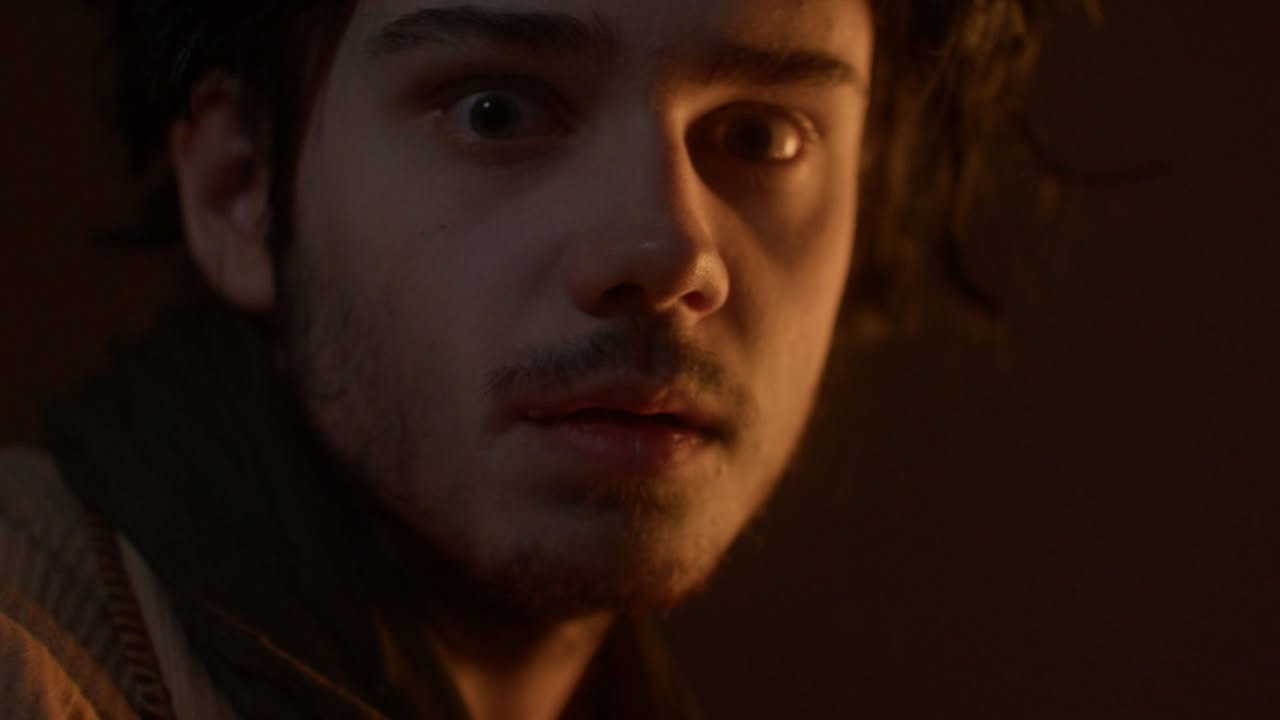
That philosophy comes through in Fortunato’s Descent, Gare’s adaptation of Edgar Allan Poe’s “The Cask of Amontillado.” The story is one of his favorites, and instead of simply reproducing Poe’s original story, Gare wanted to explore what happens to Fortunato after he is left behind in the catacombs.
The film becomes a psychological descent in which Fortunato begins rationalizing what has happened to him and eventually starts to believe that his punishment is deserved. Gare describes it as having a “Dante’s Inferno-esque” quality, mixing his own writing with Poe’s original material.
Visually, the film draws heavily from gothic cinema. Gare describes it as his personal tribute to Roger Corman’s Poe adaptations, including The Masque of the Red Death, House of Usher, and The Pit and the Pendulum. He also drew inspiration from Alice in Chains music videos and the visual world of Alien 3, particularly its dark, burnt-orange atmosphere.
“I wanted this movie to feel like that burnt orange colors,” Gare explains, connecting the look of the film to the autumn setting in which they were shooting.
Scene Break: Creating the Catacombs
One of the most interesting parts of the conversation is our Scene Break, where Gare breaks down how he created the claustrophobic catacomb sequence.
The scene plays with the audience’s perception of space. Characters can appear close together in one moment and separated by a much larger environment in the next, even though the production was working within relatively limited locations.
Gare explains that the masked figure isn’t necessarily physically there. Instead, the character is part of Fortunato’s hallucination as he attempts to make sense of why someone would punish him so severely. Fortunato begins viewing Montresor as an almost god-like entity who is punishing him for his behavior and his “lust for wine” and other sins.
The visual trickery was accomplished partly by changing the set multiple times and using camera placement to manipulate the apparent distance between the characters. Gare ultimately describes the process as “movie magic and tricky” filmmaking.
There were also moments where the limitations of the production directly affected what ended up on screen. One particularly disgusting shot of Fortunato eating a rat wasn’t properly recorded, meaning the footage couldn’t be used as originally intended. Gare says the missing version was considerably more disgusting and “vomit inducing.”
The chains also didn’t turn out exactly as originally envisioned. Gare had planned for them to resemble spider webs hanging around Fortunato, but the production didn’t have enough time or people to create the more elaborate version. Still, he doesn’t necessarily consider the idea lost. “That doesn’t mean that I won’t see that gag and that creepy visual return and something else in the future,” he says.
When a Movie Finds Its Audience
Making the movie is only half the battle. Getting people to actually see it can be just as difficult, if not more difficult, for an independent filmmaker.
Gare isn’t bothered by the possibility that something might be considered a cult film rather than a mainstream hit. In fact, he sees value in that kind of recognition because it means the movie has found people who genuinely connect with it.
When we discussed the idea of cult classics, Gare’s response was simple: “Just be happy you made something and it resonated with people.”
That attitude fits his larger philosophy. A movie doesn’t necessarily need to be universally loved to have value. Sometimes the audience that finds it is smaller, stranger, and much more dedicated.
Hishkenstein: After Dark
That brings us to the film that connects Gare’s work directly to the physical-media side of The Physical Cut.
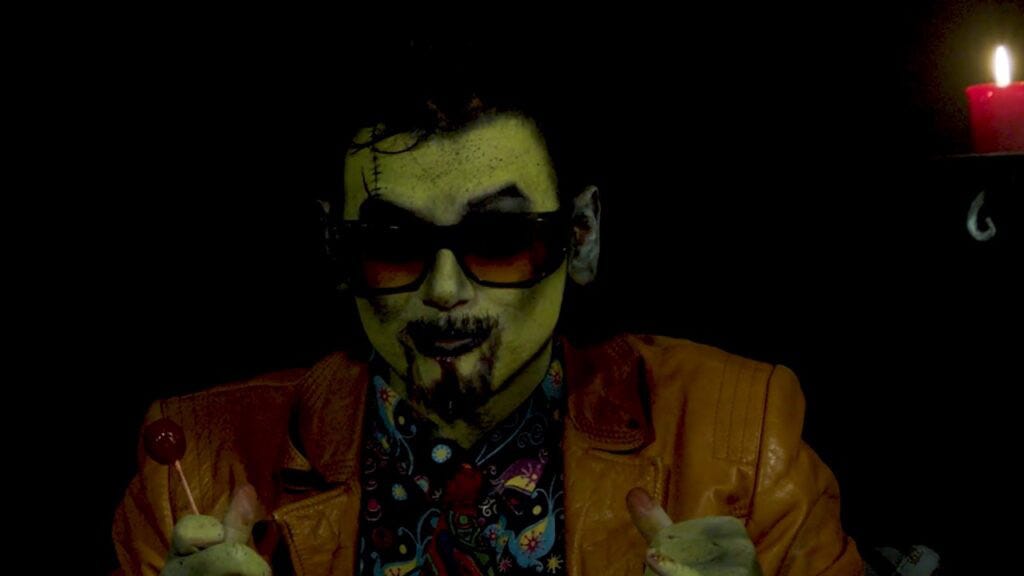
Hishkenstein: After Dark began with a character Gare and a friend created in high school during a video about a ridiculous mad scientist. Years later, during COVID, that character returned. Gare and his friends were spending time watching horror movies and strange lost films together, and he wanted to create something that captured that spirit.
The film is deliberately built as a love letter to Halloween, midnight-movie culture, B-movies, exploitation cinema, and psychedelic doom metal. Gare wanted the project to embrace its own ridiculousness rather than try to make itself more respectable.
He describes the result as “every bit as gross and just completely stupid as you would imagine,” which may be one of the most accurate descriptions possible for the project.
From Streaming to Blu-ray
Hishkenstein: After Dark is getting both a streaming release and a Blu-ray release through CoffinMaker Video, with the physical release expected in late October. The Blu-ray will also include Bad People Doing Bad Things, the earlier film that introduced the character, along with audio commentary, new artwork, clips, and short films.
For Gare, having the film released physically is particularly meaningful because he’s a collector himself. He collects Blu-rays, VHS tapes, and vinyl, and his reason for collecting comes back to the personal connection that physical objects can create.
“It’s having something that is like a memory,” he says. He connects that directly to his earlier description of film as a time capsule and hopes the physical release allows Hishkenstein to continue existing in the world beyond its initial release.
Why Keep Making Films?
We ended the conversation by asking Gare why, after everything he’s learned so far, he thinks it’s important to continue making films.
His answer comes back to the idea of influence. Everything artists create comes from somewhere, whether it is music, film, architecture, memories, or other forms of art. The job isn’t simply to copy what came before. It’s to take those influences and find your own way of transforming them.
Gare’s hope is “to continue to create new art so that it will continue to inspire others to do their own type of art.” He sees filmmaking as part of that ongoing cycle of influence, where each generation takes something from the previous one and finds a new way to make it its own.
But even after all the discussion about influences, filmmaking, preservation, and artistic expression, Gare comes back to the same principle that has been running through the entire conversation. “At the end of the day still remain entertaining because that’s your job. So entertain.”
And maybe that’s the best way to describe Gare-Scare’s approach to movies: take inspiration from the past, make something that feels like you, embrace the weirdness, and above all, put on a good show.
Listen to the full conversation at The Physical Cut and visit KRPodLab.com to support our show by buying us a coffee.